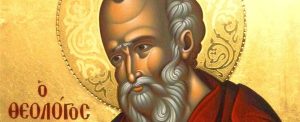
From one of the priest’s prayers in the Divine Liturgy: “Thou art he that offers and is offered, Thou art he who accepts and is distributed, O Christ our God.”
In 1157, the Patriarch-elect of Antioch Soterichos Paneugenos asserted that this is a logical contradiction. A true sacrifice requires a distinct payer and payee, he reasoned. To preserve the intelligibility of the Cross, Soterichos proposed a correction: the Son offers as High Priest, but the Father alone receives. If the atonement is a transaction, he reasoned, then the Liturgy is incoherent — you cannot pay yourself.
The modern Protestant doctrine of Penal Substitutionary Atonement (PSA) was not yet on the scene. But as the Church in council examined Soterichos’s reasoning, the fathers gathered at Blachernae anticipated that innovation as well as addressing Soterichos’s thought. And in responding to this specific issue, the Council gave us a surprisingly applicable response to the transactional PSA concept as well.
Newman Nahas provides this excellent summary:
| Doctrine | Transactional View |
Conciliar View |
| The Problem | Debt. A legal claim against us. | Disease. A deficit of life within us. |
| The Mechanism | Exchange. Payment satisfies the claim. | Union. Divinity heals humanity. |
| The Recipient | Father Alone. The Son pays the Father. | The Trinity. The Son offers and receives. |
| The Eucharist | Memorial. Remembering a closed deal. | Entrance. Joining an eternal offering. |
This table is part of the introduction to Nahas’s analysis of the Council of Blachernae, its assumptions, its reasoning, and its findings.
Take the time to read his entire thoughtful article at Thou Who Offerest and Art Offered — The Council that Rejected Transactional Atonement.