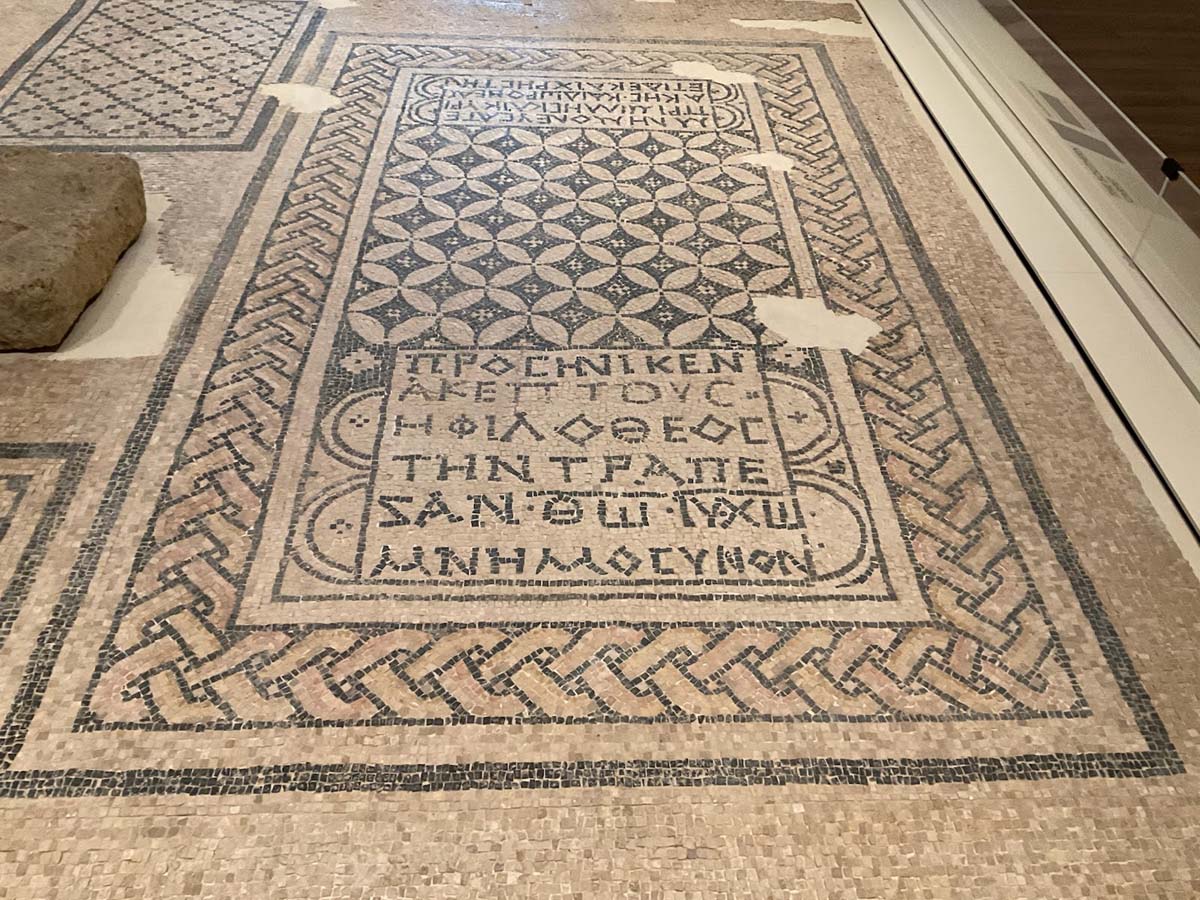
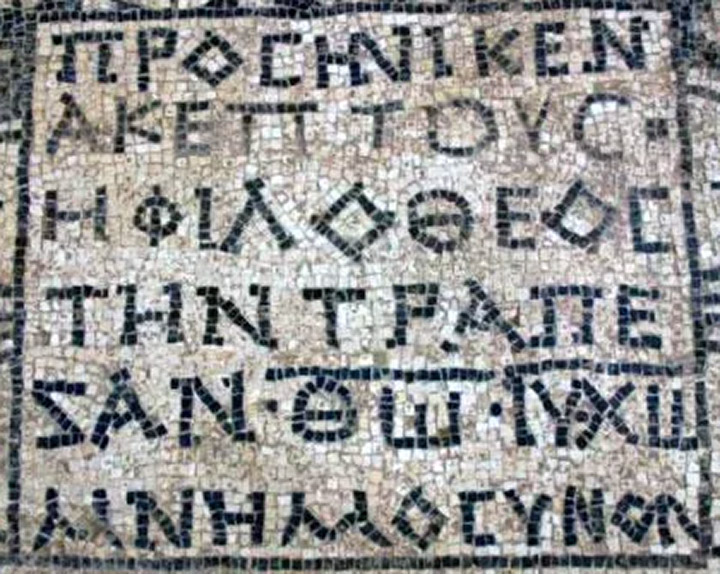
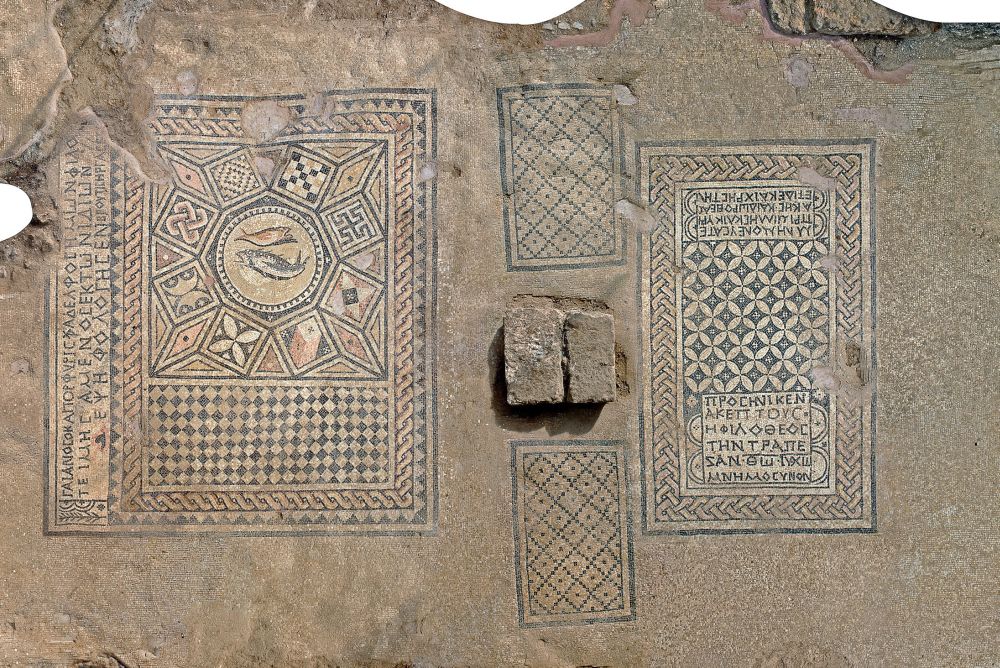
The Megiddo inscription is a 3rd-century (circa AD 230) Greek text within a mosaic floor discovered in 2005 at the Megiddo prison in northern Israel, located inside one of the world’s oldest Christian prayer halls. The inscription includes a prominent dedication by a woman named Akeptous offering a table “to God Jesus Christ,” providing early evidence of Christians worshiping Jesus Christ as God.
Key Details of the Megiddo Inscriptions
The mosaic features three main Greek inscriptions, documenting a 3rd-century community in Galilee:
- Akeptous Inscription: Reads, “The God-loving Akeptous has offered the table to God Jesus Christ as a memorial”. This is significant because it explicitly calls Jesus “God” a century before the Council of Nicea.
- Gaianus Inscription: Mentions “Gaianus, our brother,” a Roman centurion who funded the mosaic’s creation with his own money.
- Women’s Inscription: Mentions four women: “Remember Primilla and Cyriaca and Dorothea and, lastly, Chreste”.
- Artisan Inscription: Identifies the creator of the mosaic as “Brutius”.
Significance
- Earliest Christianity: The site predates the Roman Empire’s official adoption of Christianity, revealing that 3rd-century Christians in the area were already worshipping Jesus as divine.
- Role of Women: The inscriptions highlight the prominent, active roles women held in early Christian communities.
- Coexistence: The mention of a Roman officer (Gaianus) suggests a level of co-existence between the military and early Christians.