John 20:19-31 • Acts 5:12-20
Glory to God the Father, the Son, and the Holy Spirit.
For the past week we have been celebrating the bright resurrection of Christ with feasting, worship, gift-giving, visiting one another’s homes, and crying out, “Christ is risen!”
Did you think we were done? Not so fast – today on the Church calendar is named Antipascha, which means Another Pascha. In fact, the Lord was present with his disciples for forty days before ascending to his Father – so this feast goes on for another month and a half; we are just getting started!
Today we’ve read about the appearance of Christ, through locked doors, and we heard him say, “Peace to you! As the Father has sent Me, I also send you. Receive the Holy Spirit. If you forgive the sins of any, they are forgiven them” (John 20:21-23).
This is not Pentecost. Pentecost comes seven weeks later, when the Lord pours out the Holy Spirit on all the faithful. “Your sons and your daughters shall prophesy, and your young men shall see visions, and your old men shall dream dreams, and on my servants and on my handmaidens I will pour out in those days of my Spirit; and they shall prophesy.”
This is something different. Today the Lord comes to the apostles, and to them, specifically, he gives the Holy Spirit, and says, “If you forgive the sins of any, they are forgiven them.” What a great and sobering authority has been given to the Apostles! Here is why James instructs us, “Is any sick among you? Let him call for the presbyters of the church; and let them pray over him, anointing him with oil in the name of the Lord, and the prayer of faith shall save the sick and the Lord shall raise him up; and if he has committed sins, they shall be forgiven him” (James 5:14-15).
On this day we remember the appearance of Christ, through locked doors, when the apostles and Thomas were gathered, and this time the Lord answered Thomas’s question.
When your family gets together, do you tell stories about each other? Everyone’s failures are memorialized forever, and the story is told every time you get together. Remember when you made that terrible mistake and everybody laughed at you? Good times. These stories last a long time. A man can be an adult, a success in business, become mayor of the city, and somewhere his brothers are still saying, “Back in first grade, he used to eat paste.”
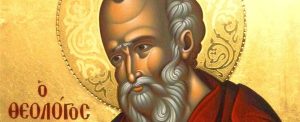
What if you were a saint, a holy apostle appointed by Christ our God, a successful church-planting missionary and martyr, but people mainly remembered you as Doubting Thomas?
Is Thomas wrong? Did you notice last night in the Vespers hymns, we sang: “O good unbelief of Thomas… Thou didst not reject him for his faithlessness. When he saw Thy side and the wounds in Thy hands and feet, his faith was made certain. Having touched and seen, he confessed Thee.”
Because of Thomas’s insistence, we have it made crystal clear that this was no ghost, no vision, but a real, solid resurrection of the same body that was nailed to the Cross. Transformed, life-giving, deified, but not other than a human body.
I am kind of amused by the academics who have clever little explanations for everything in the Bible… like that Jesus didn’t really rise from the dead… it’s just that his ‘God consciousness’, spirit and memory were so powerful to his followers that when they were together after Jesus died, it almost felt like he was really there with them. ‘Yeah, remember when Jesus was dead but his spirit was so strong that it felt like he grilled us some fish on the beach? Man the memory of that guy can really make a delicious breakfast!’ (Nadia Bolz-Weber).
The lesson we learn from Thomas is not that doubt and reasoning are bad. Rather, we learn that God is not afraid of our honesty. We need to both question authority and also allow the ultimate authority to enlighten us. There are no stupid questions, and I hope no priest will ever tell you “Don’t ask that question.”
When Lazarus died, after four days the Lord said, “Let’s go down into Judea.”
The disciples said to him, “A short while ago the Jews there tried to stone you, and yet you are going back?” Then Thomas said to his fellow disciples, “Let us also go, that we may die with him” (John 11:7-16).
And at Gethsemane, the Lord said to his disciples, “I go to prepare a place for you. And I will come again and receive you to myself; so that where I am, there you may be also. And where I go you know, and the way you know.”
Thomas said to Him, “Lord, we do not know where You are going, and how can we know the way?”
Jesus said to him, “I am the way, and the truth and the life. No one comes to the Father except through Me” (John 14:3-6).
Instead of Doubting Thomas, I think of him as Thomas who asks the important questions. Thomas who says what everybody was thinking but nobody spoke up and asked.
When I greet new visitors here, you’ll always hear me say, “Ask anybody anything!”
Ask questions. Now there may be questions I’ll tell you are a little obsessive or missing the point, questions that betray assumptions not based on reality – but Christ is never about to tell you, “Thomas, your question offends me.” Instead, the Lord undertakes to start you on the road to knowing him. “Now this is eternal life: that they know thee, the only true God, and Jesus Christ, whom thou hast sent” (John 17:3).
Here is the faithfulness of Thomas. He doesn’t follow the Lord in order to be saved from a violent death; Thomas is sure that by returning to Judea they’re all going to die. But: “Let us also go, that we may die with him.”
This is like the faithfulness of Job. When Job lost his home, his business, his family, and his health, his wife in despair tells him, “Will you still hold fast to your integrity? Just curse God and die!” Job answers, “You are talking like a fool. Shall we accept good from God, and not trouble?… Though he slay me, yet will I praise him!” (Job 2:9-10; 13:15).
Job stays faithful to the Lord. But not without questions! The whole book of Job is a big question: Why are we suffering? If it’s not because of our sins, and it’s not because God is punishing us, then why is this our experience?
In the Psalms, King David cries out, “O God, why hast thou cast us off for ever? why does thine anger burn against the sheep of thy pasture?” (Psalm 73:1LXX)
And nothing in this offends the Lord.
But Jesus might answer you, “Job, the world is not about you; it’s not an entirely safe or predictable world, but it is becoming what God is making it into. And God invites you to live in that real and wild and beautiful and scary world, to be blessed and to suffer, and to let God earn your trust.” (My non-inspired summary of the book of Job.)
Remember the three young men in Daniel chapter 3: The king orders them to worship his idol or die in a furnace. And the young men answer, “O King, we have no need to answer you in this matter. Our God whom we serve is able to deliver us from your burning, fiery furnace. But even if he does not, we’re not going to worship your stupid idol” (Daniel 3:17-18, paraphrased a little).
They’re not faithful to God in order to be saved from the fire. They’re faithful to God because they have built their life on trust that God is good and will act according to his own nature for his own glory.
And, in fact, they do get thrown into the furnace. God does not exempt them from suffering. But he is there in the fire with them. And though the fire kills the men who throw them in, the three young lovers of God experience the presence and love of God. To them, the furnace is full of light.
And so, when all hope has died with the Lord on the cross, and Thomas can’t believe the others’ story that they’ve seen Jesus alive, he doesn’t turn away from his God. But he says, “Show me. And then I’ll believe.”
Remember, Thomas is one of the Twelve Apostles. He isn’t a skeptic. He’s not a critic. He is a church member.
So when the Lord comes to Thomas, he says, “Look at my hands; touch my side. Stop doubting and believe.” And all Thomas’s questions are answered, and he calls Jesus “My Lord! And my God!”
The Orthodox Study Bible note here says, “The doubt of Thomas was not a doubt of resistance to truth, but one that desperately desired a truthful answer, a doubt that gave birth to faith when the answer was revealed.”
In John’s Gospel, belief isn’t just something you do with your mind. It doesn’t mean you accept a proposition, you agree with a piece of information. In the Creed, we are not confessing, “I accept as accurate that there is one God Almighty, maker of heaven and earth…”
You’ll hear people say, “I don’t believe in abortion.” Or “I don’t believe in guns.” You know, abortion and guns are real things, and nobody is expressing skepticism that they exist. We’re saying, these are things I do or don’t approve or defend or put my trust in.
I am putting my trust in one God, the Father Almighty. I am committing myself to faithfulness to one Lord Jesus Christ, the only-begotten Son. That’s what the I Believe in the Creed says.
Have you ever had a parent, a spouse, or a friend tell you, “I believe in you”? What they mean is they love you. And they have confidence in you. You have earned their trust. In John’s Gospel, that’s what it means to believe in Jesus. It’s about putting our trust in him today and then building a life on trusting him.
So here’s some good news for doubters, for people who still have questions: You don’t have to have any of the Big Questions figured out. The only thing you need to be certain about is that you have chosen to belong to Jesus Christ, and he knows and loves and trusts you.
Thomas said he wouldn’t believe Jesus was actually alive again until he saw him, and touched his wounds with his own hands. So what did Thomas do when Jesus actually offered his hands and side for Thomas to touch?
Thomas responded, “My Lord and my God!”
So, Question authority! Thomas sure did. But, like Thomas, be willing to allow Authority to answer, and be willing to exercise some humility when the answer doesn’t always make sense.
Somebody asked this week: In heaven, when you see Jesus, what are you going to ask him first? (I’m going to ask: What am I doing here?”) Many times when someone asks “Why didn’t God just do it this way?” what they mean is “I am laughing at your idea about God,” and not actually asking a question that they want an answer to.
One of the differences between the apostolic Faith and a lot of made-up belief systems is that we don’t pretend to have answers for everything. On the internet, you ask a pastor something, and if he doesn’t have an answer he’ll make one up – or, answer “Well I think…” Nobody cares what you or I think.
Saint Paul writes to the Corinthians,
Brethren, when I came to you, I did not come with excellence of speech or wisdom declaring to you the testimony of God. For I determined not to know anything among you but Jesus Christ, and Him crucified. And my speech and my preaching were not with persuasive words of man’s wisdom, but in demonstration of the Spirit and of power, that your faith should not be in the wisdom of men but in the power of God. (1 Corinthians 2:1-5).
My grandfather told me that when he was a boy he asked hard questions about God and he was punished. That’s disrespectful! That’s blasphemy! So he walked away from his religion because it was evidently too fragile to stand up to a boy’s questions.
Thomas asks the living God to his face: Show me the nail holes! And Jesus is not surprised or offended. He shows him his hands and side. “Thomas. Will you trust me now?”
You and I can have questions, and not be alienated from God. We can respect some Mysteries. I’m not threatened if you ask hard questions that I haven’t got answers to. Because if I know nothing except Christ crucified, and nothing else makes sense, then I have eternity to ask him.
You know, the certainty that Christ gave Thomas when Thomas’s questions were finally asked and answered launched Thomas on a mission that did not end with his martyrdom in India. Fifteen hundred years after Thomas planted the Orthodox Church in India, when Portuguese explorers and Roman Catholic missionaries arrived in Malabar, they were greeted – by indigenous Orthodox Christians.
“Oh, you Europeans, you’re Christians too? That’s great! Come to church with us!”
The deposit of faith that was born in Saint Thomas endured.
To the glory of God the Father, the Son, and the Holy Spirit.