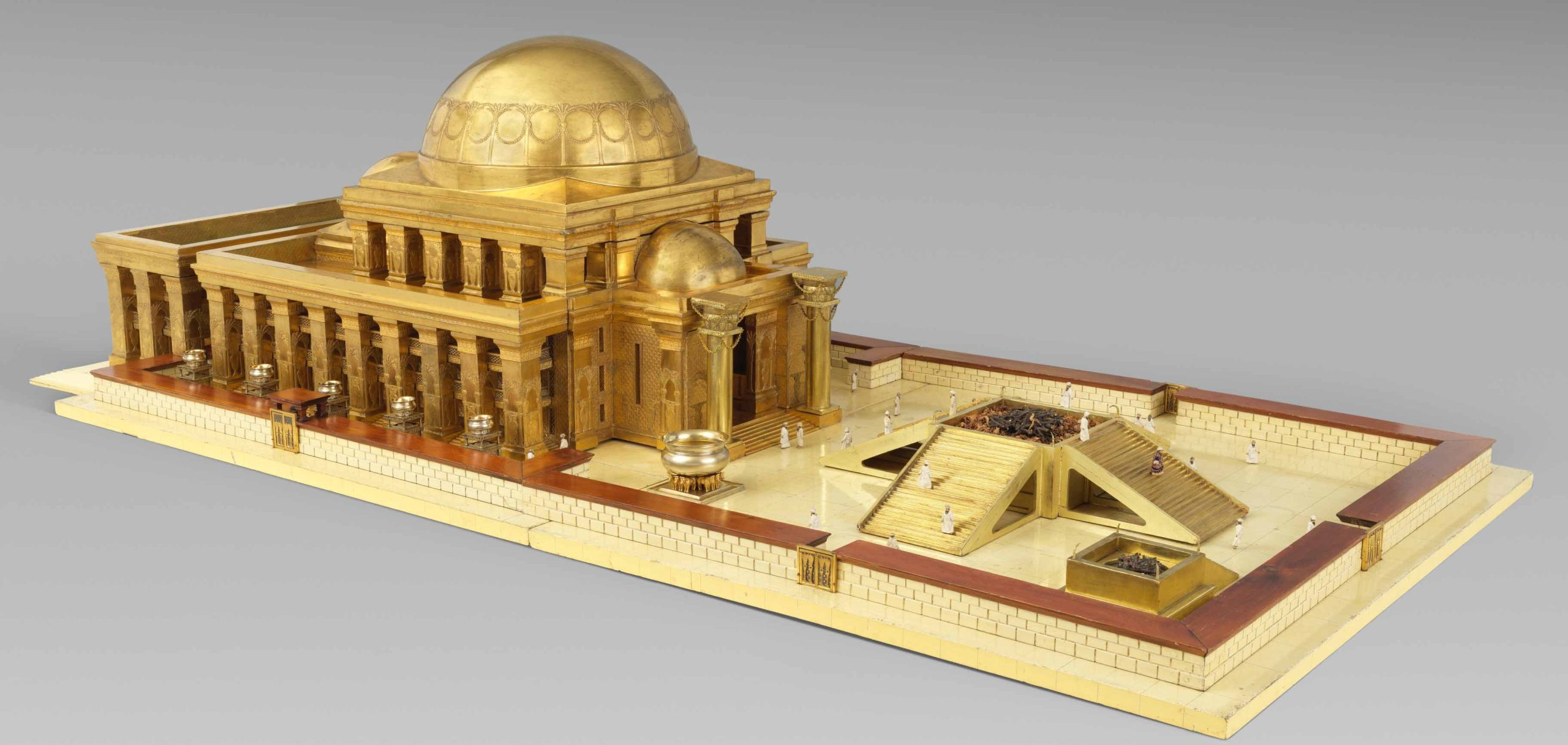
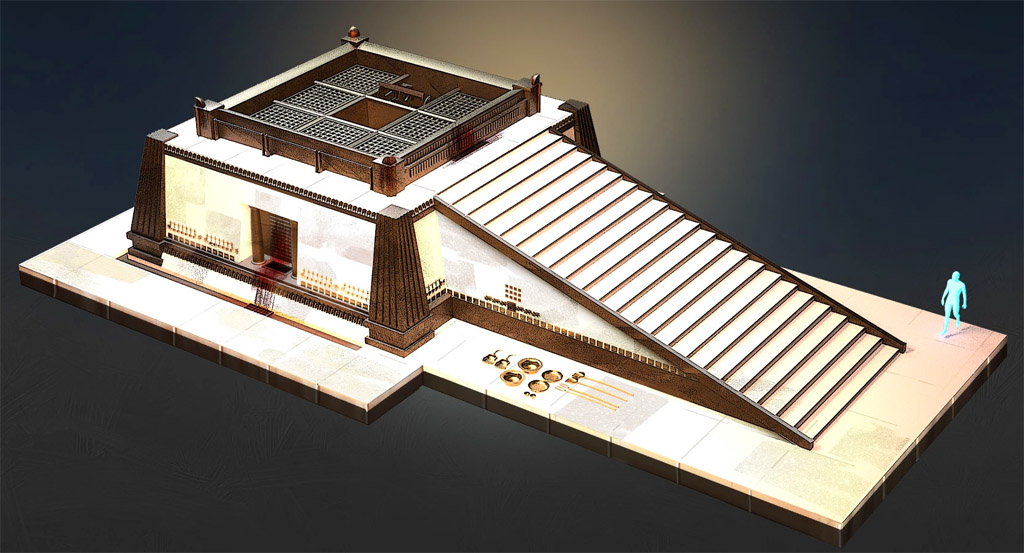
 The first thing the Israelites saw as they entered the temple court was the altar of burnt offering. Here the priests offered the people’s sacrifices morning and evening.
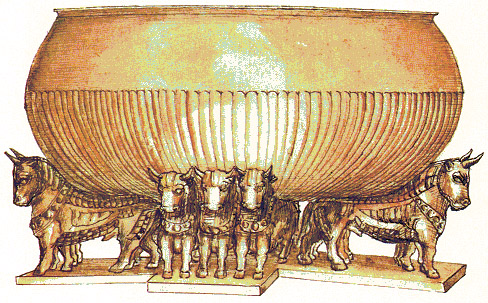
In the corner of the temple courtyard stood a massive brass basin known as the Molten Sea. Measuring some 18 feet in diameter with an elaborately decorated rim, the vessel stood on a base bade of twelve oxen. It was filled with water with which the priests washed.
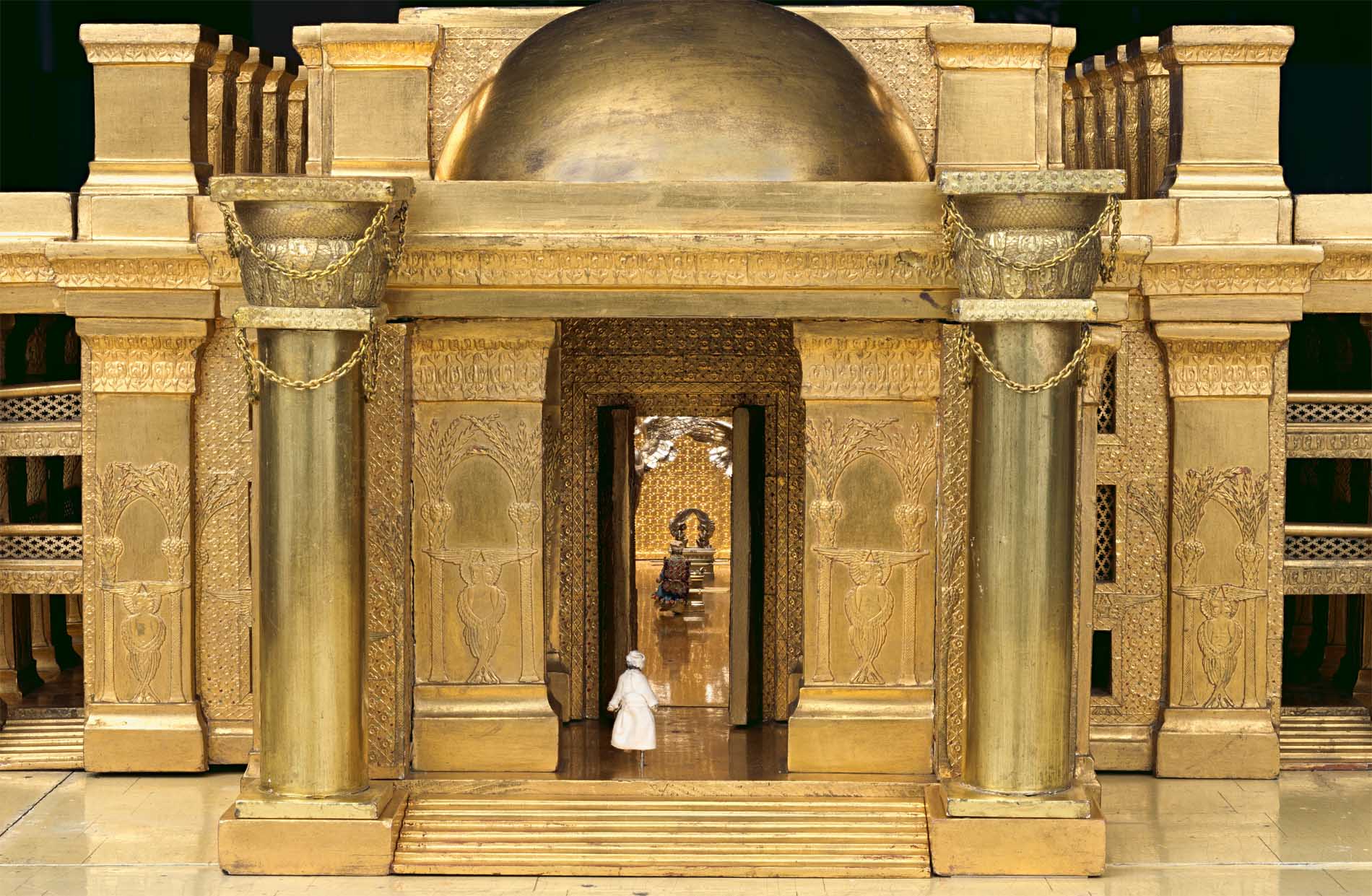
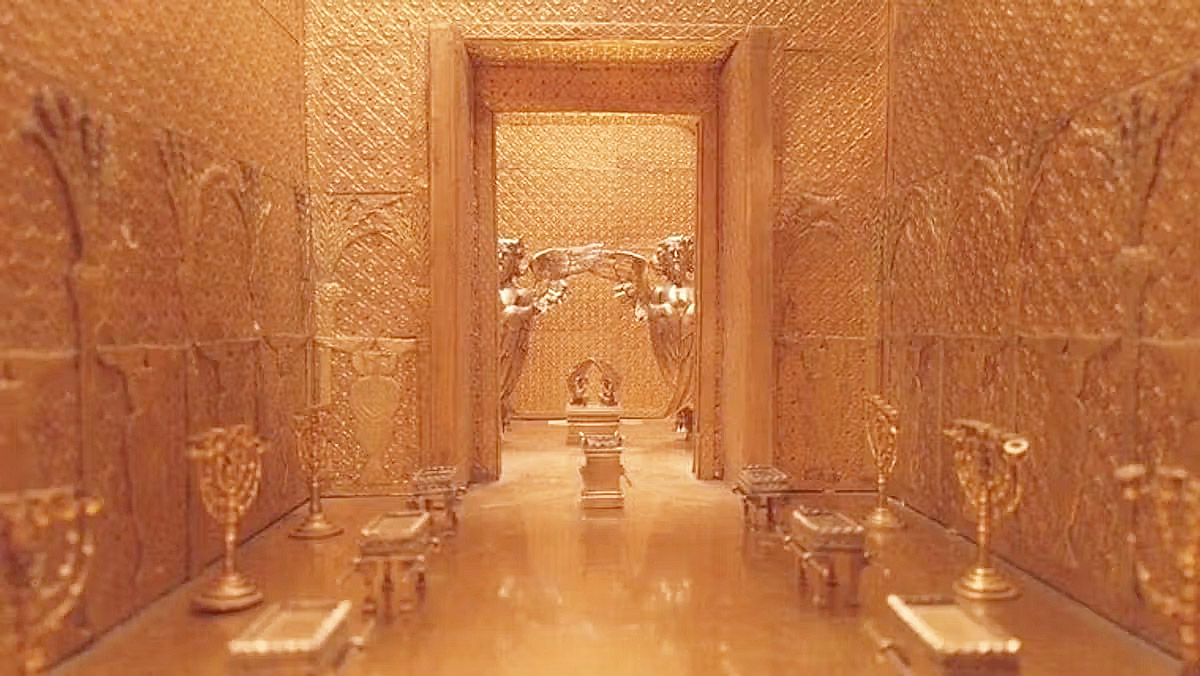
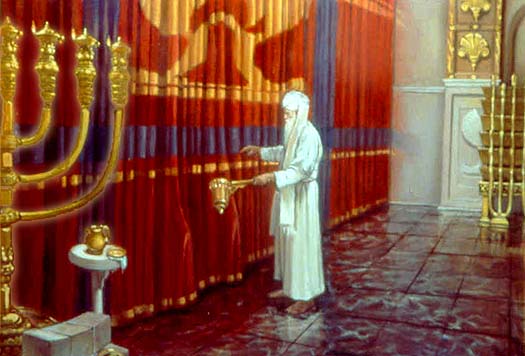 One notable issue in this model is the open gate to the Holy of Holies, which was always separated from the Holy Place by a veil or curtain, concealing the Ark. The Holy of Holies was entered only once a year, by the High Priest, bearing blood of purification.
The domes on this model, are admittedly fanciful as well, not being described in scripture – though domes were not altogether unknown in the near east in the first millennium BC.
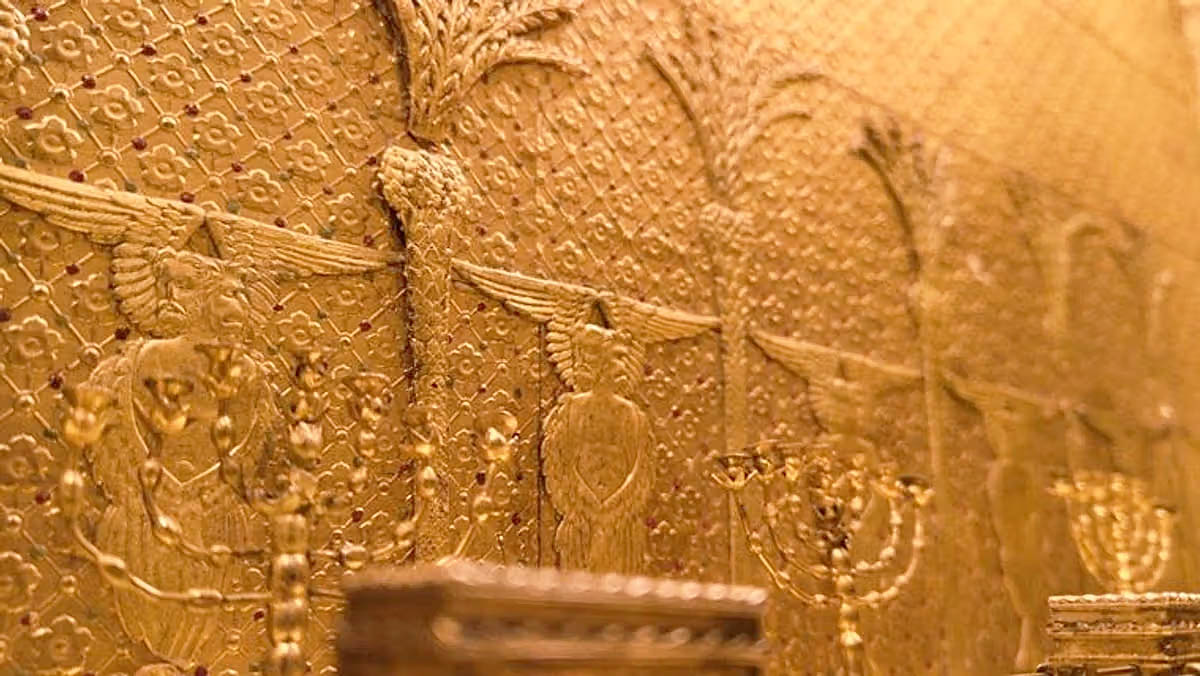
While fine details are certainly choices of the Victorian artist, this model with its interior details gives an idea of the rich, extravagant golden splendor and imagery described in scripture.
One can imagine standing here daily, wearing priestly vestments, seeing icons of angels, hearing chanted praises, offering intercession and incense to the Lord.